Waterjet cutting is a cutting process that uses water as the cutting material.
Water is pressurised (3800 bar) with a pump and taken through a fine nozzle. The resulting strong and even waterjet (100 m/s) can be used to cut rubber, plywood, plastic, leather and various floor coverings. Abrasive particles are added to the waterjet to cut stronger materials such as titanium, hardened steel, stainless steel, aluminium, glass, marble, ceramic tiles, granite and plastic.
By using the CNC controller of the machine, we can cut very complex details. This can help avoid subsequent turning, drilling and milling.
Water can be used to cut almost any material without subjecting it to thermal or chemical changes. Cutting with water does not heat the materials, so there are no harmful gases for the environment. Details are not deformed and smooth surfaces are not damaged. Waterjet diameter for different materials: 0.7…1.0 mm, providing considerable material savings.
METHOD ADVANTAGES
Advantages of waterjet cutting over other cutting technologies:
- Environmentally friendly cutting method
- suitable for cutting a variety of non-metal materials, including flammable materials
- does not cause thermal and chemical changes in materials
- minimal material loss
- precise cutting line
- cheapest and fastest method for complex details
- good surface quality that does not require follow-up processing
- cat cut materials up to 100 mm thick
APPLICATIONS
Hydro-abrasive waterjet cutting is used in a number of different manufacturing industries. The use of this technology is approved in the following areas:
- automotive industry
- workbench construction
- airplane manufacturing industry
- shipbuilding industry
- machinery and equipment construction
- metallurgy and foundry
- textile industry
- leather industry
WATERJET CUTTING IS SUITABLE FOR THE PRODUCTION OF EQUIPMENT FOR THE MEDICAL INDUSTRY AND FOOD INDUSTRY WAS WELL AS FOR PRODUCING GLASS, CERAMIC, MARBLE, PLASTIC, RUBBER, WOOD AND PAPER ITEMS.
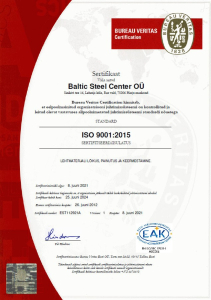
ISO 9001:2015 Certification